I contributed across Krea 3's full stack: pretraining, midtraining,
post-training, prompt expansion, and the inference harness. I led data curation and built
embedding-search infrastructure to efficiently index our image collection and mine editing
pairs, using open-source VLMs to generate scores and captions. I also helped train
VLM-based prompt expanders through SFT and RL.
I ran pretraining and post-training evaluations and ablations with teammates, and used
midtraining data to teach what pretraining had missed. I led collection of human annotation
data for DPO and reward model training, and contributed to the Fast and Ultra inference harnesses.
I worked across Krea 2's development on a small team, spanning
pretraining, midtraining, post-training, and prompt expansion. My data work included curation
and sampling pipelines to broaden concept coverage, and leading human annotation data collection
for DPO and reward model training. The examples below highlight a few pieces of that work,
from world knowledge to moodboard-driven generation.
Ran pretraining and post-training evaluations and ablations
with teammates to find what actually helped.
Built the prompt expander from SFT through RL, designing text
rewards to complement the team's image rewards.
Built moodboard-driven prompt expansion.Turned moodboards into text conditioning,
selecting reference images for texture and style.
Added safety training to reduce unintended IP leakage and unwanted
nudity while preserving accurate anatomy and artistic expression.
Owned data curation and midtraining concept coverage.Owned data curation and pipelines, using midtraining
to close concept-coverage gaps, from entities to camera angles and styles.
Led collection of human annotation data for DPO and reward model training.
World Knowledge and Concept Coverage
I built the data pipelines to keep the long tail in the training mix.
Embedding-based clustering broadened visual coverage; Wikipedia/Wikidata-guided sampling
and caption searches helped retain named entities that ordinary cluster sampling could miss.
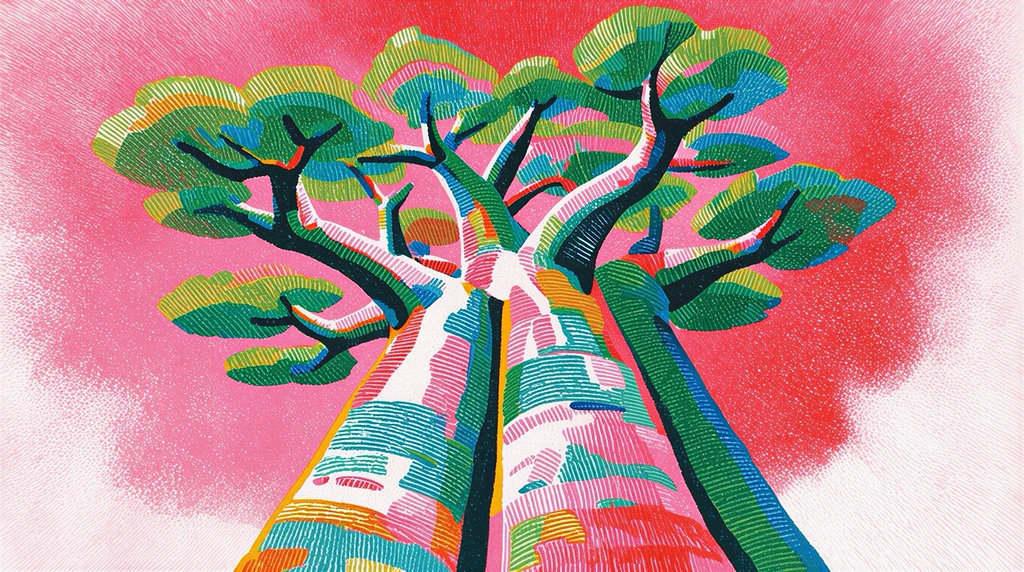
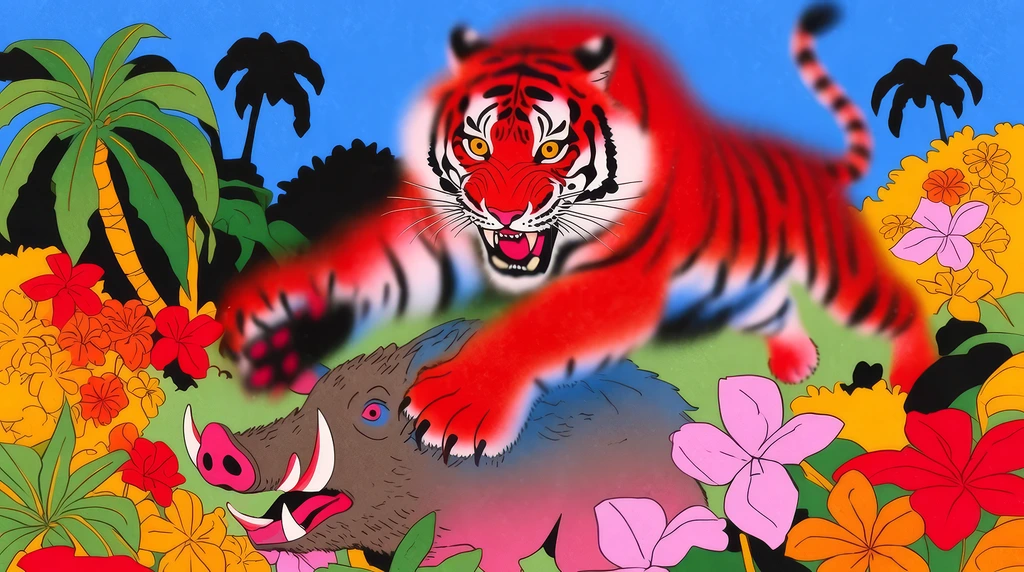
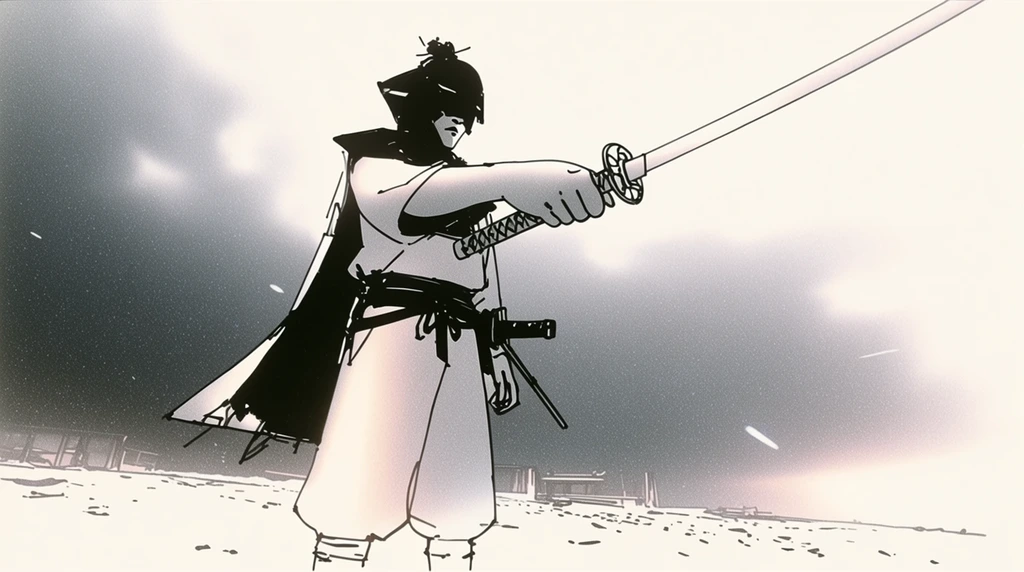
Midtraining was our last chance to close gaps in entities, camera angles, and styles.
Baobab · fisheye perspective from belowTiger and boar · subjects in motionSamurai · pose and wide-angle composition
I built and trained the text prompt expander behind moodboards.
This is text-to-image generation: the moodboard's images are interpreted in text space,
rather than passed to the image model as a set of direct image references. The expander
folds their visual direction into the user's prompt, so a board can combine disparate
references. A selected style-reference image separately supplies texture and style.
I trained the prompt expander through SFT and RL, designing text rewards
to complement the team's image rewards. Safety training addressed unintended IP leakage and
unwanted nudity while preserving accurate anatomy and artistic expression.
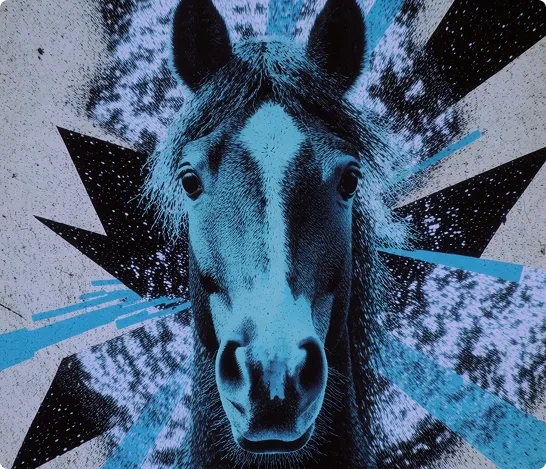
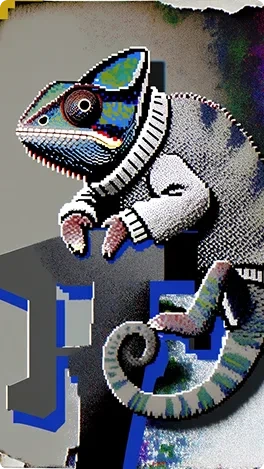
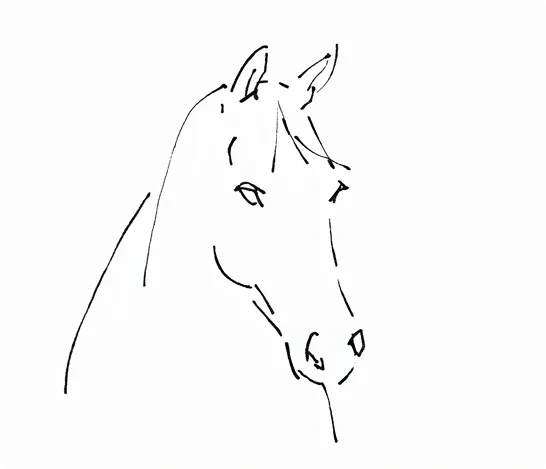
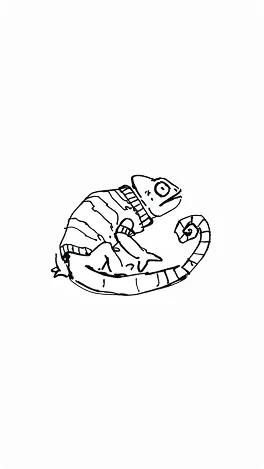
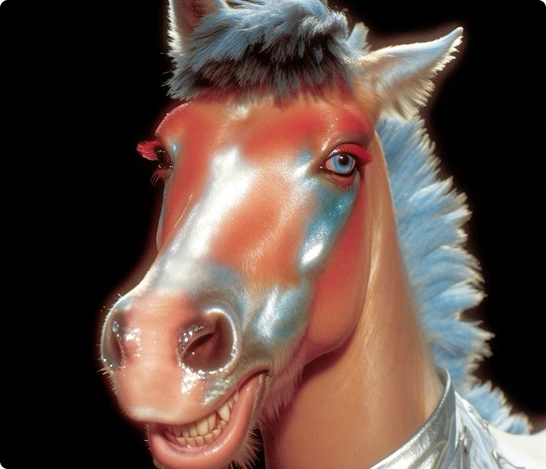
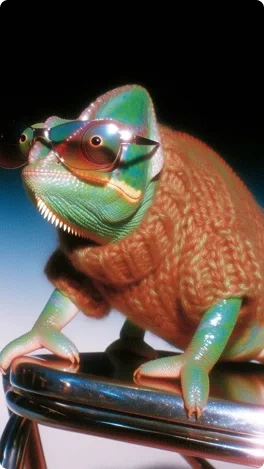
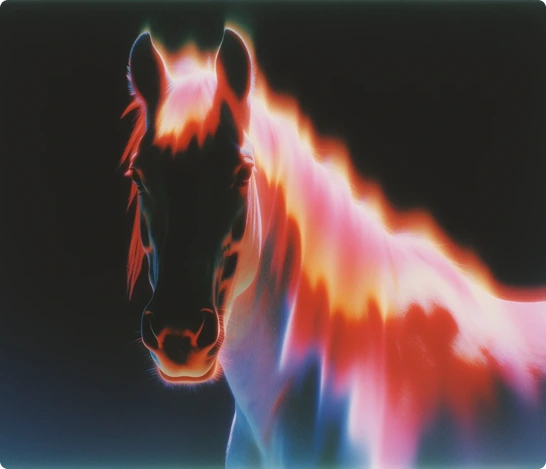
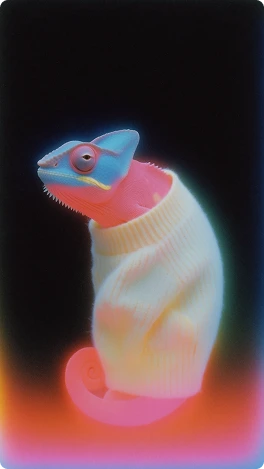
Below, the same two subject prompts run through four moodboards.
Cyber Zine outputs · same two prompts · click to expand
“Portrait of a horse”“Chameleon wearing a sweater”
Minimalist Ink outputs · same two prompts · click to expand
“Portrait of a horse”“Chameleon wearing a sweater”
Futurist Glam outputs · same two prompts · click to expand
“Portrait of a horse”“Chameleon wearing a sweater”
Thermal Airbrush outputs · same two prompts · click to expand
“Portrait of a horse”“Chameleon wearing a sweater”
I hacked Qwen3-8B to solve ARC puzzles by filling in the easy parts first,
instead of working in typewriter order. I built the training and evaluation
pipeline to compare the two approaches.
Private Federated Learning and On-Device Recommendations
Google Gboard
Phones encode words into compact sketches; secure aggregation combines them
before noise is added to release frequent-word counts. I built private heavy-hitter tasks
and custom TensorFlow Lite ops to run SecAggIBLT efficiently on Android, helping improve
typing models, emoji search, and sticker suggestions.
Selected contributions
Shipped the team's first personalized on-device models: sticker recommendations
using item-item collaborative filtering and user-item embeddings.
Built private heavy-hitter tasks with IBLTs, secure aggregation, and
differential privacy. Used the data to improve typing models, emoji search,
and sticker suggestions.
Built custom TensorFlow ops to run SecAggIBLT efficiently on Android phones
through TensorFlow Lite.
Helped establish federated model evaluation and resolved barriers to private
heavy-hitter tasks across teams.
Drip.art — Personalization and Video Stylization
Co-founder and CTO · Later Comfy Org
I co-founded Drip.art and built its training pipelines and model-weight caching and hot-swapping engine, serving thousands of people’s fine-tunes from a handful of A100 GPUs.
Video stylization
Optical flow tracked a grid of points through the video. When uncovered area exceeded a threshold, we selected a new keyframe and reset the grid, with minimum spacing and a separate threshold for hard cuts.
We stylized keyframes together as a filmstrip in one ControlNet-conditioned diffusion pass, then split it back into frames. We filled the gaps with a few-shot neural model inspired by EbSynth, trained to map original keyframes to their stylized counterparts.
Personalization with DreamBooth
We fine-tuned Stable Diffusion on a person’s photos, binding their likeness to a prompt token. Prior preservation helped retain the base model’s general capabilities. I tuned the fine-tuning recipe and built the photo preparation, training, and model-serving infrastructure, including weight caching and hot-swapping between personalized models.
Just for Fun
Kinect the Dots
Interactive art · 2015
A wall of about 1,900 LEDs that turns nearby people into live RGB silhouettes.
I built the installation from the physical structure and wiring to the C++
depth-camera processing and microcontroller code.
Shown at Bay Area Maker Faire, Burning Man, and Santa Cruz Glow.
Received two Editor’s Choice awards at Maker Faire.
Inside the installation
A Kinect tracks people; a MacBook sends the display data over USB to a Teensy
microcontroller driving the LEDs. Two mirrored acrylic layers create an
infinity-mirror effect.
Cold builds could take 30–45 minutes, and I kept missing when they finished—or failed.
I built a USB-connected LED widget to make the result hard to miss, then taught
teammates to assemble and program their own.
How it works
A Python daemon polls the build server and sends status changes to a Teensy
microcontroller. A ring of LEDs pulses red for failure and green for success,
inside a laser-cut wood enclosure with a white acrylic diffuser.
Experience
Krea AI
September 2025 - Current
Joined as the fourth AI researcher on the small team behind Krea 2
and Krea 3. Worked across pretraining, midtraining, post-training, and prompt expansion,
and on Krea 3's inference harness. Led data curation for both models.
Birchwood Software Corp.
2024 - 2025
Co-founder. Built a general-purpose RAG engine with custom retrieval
and ranking, delivered through Slack. Sold it to its main customer.
Comfy Org (formerly Drip.Art)
December 2022 - December 2024
Co-founder and CTO. Led a small engineering team and pre-seed fundraising,
from personalized image generation to ComfyUI workflow infrastructure.
Stayed on as an advisor after leaving the CTO role.
Built evaluations for personalized models and studied engagement across
10k+ users; brought ComfyUI's original author on as a co-founder
and led the pivot to workflow infrastructure.
Built automated LoRA/DreamBooth training and served hundreds of custom models concurrently.
Built GPU orchestration across AWS, Lambda Labs, and CoreWeave.
Delivered same-day fine-tuning and subsequent generation in under five minutes.
Meta
May 2022 - December 2022
Ads Core ML. Built and optimized AutoML systems; worked with other teams
to measure the gains from different automated approaches.
Google
December 2016 - April 2022
Gboard — Federated Learning
July 2019 - April 2022
Worked on Gboard's modeling team and partnered across teams on private
federated learning. Mentored teammates and gave tech talks on collaborative filtering.
Search — Frontend
December 2016 - July 2019
Improved mobile Search rendering through experiments; built libraries used
by virtually every mobile query and async APIs. Supported shared components.
Led Search Features Bootcamp sessions and managed two STEP interns whose
work led to full-time offers.
Apple
May 2013 - December 2016
Built authoring and localization tools for the Tips app and interactive
product tours in more than 20 languages. Led an exploratory support chatbot
project, managed an intern, and mentored junior engineers.
Just For Fun
Technical blog: ML experiments and practical AI engineering,
including how a simple document-reading agent outperformed our RAG pipeline.
Read the blog.
Blaze/Bazel build widget (2017): Built an LED widget to flag
finished or failed builds, then taught teammates to assemble and program their own.
Kinect the Dots (2015): Built an interactive installation with
about 1,900 LEDs; received two Editor's Choice awards at the
Bay Area Maker Faire ↗.
Education
Rochester Institute of Technology · 2009 - 2013
BS, Computer Science. Minors in Mathematics and Economics.